

How to support your colleagues during external incidences [Live post]
[Refreshed: 29 April 2026 – This is a live post]
This guidance is in response to the the ongoing societal unrest and groundswell of hate crimes we have seen across the country in recent times.
Including, but not limited to the race riots in 2024, politically motivated protests against companies (for example, those supporting countries during wars), polarised views against targeted groups (for example, following terrorist attacks or post the Supreme Court Judgement on Trans identity in 2025) and recent religious hate crime incidences. The media and political rhetoric has also contributed, based on extreme views such as those on immigration.
Purpose:
Ensuring Employers are supporting colleagues during external incidences that target a particular group. For example trans, race or religious motivated incidences and ongoing external discrimination
We continue to work with our members to ensure that workplaces remain a safe place for everyone.
The current climate which has been influenced by culture wars, polarisation and other global and environmental influences has caused increasing unrest within society.
In addition, there has also been an increase in companies being targeted for their perceived practices and who they support, through protests or backlash, which can mean certain identity groups within those organisation are targeted.
It’s important that organisations maintain and continue to re-iterate a zero tolerance on any discrimination within the workplace, and ensure they are addressing any arising issues appropriately.
Tell us your feedback
Whilst this is a guide based on recent incidents and include how employers have responded, we also believe that having some essential mechanisms and processes in place for any future scenarios and incidences, as well as improving awareness within the organisation, will substantially help ensure a safe space within the workplace.
Information has been collated from various organisations who have put measures in place that have created the best impact.
If your organisation has found that an intervention or supportive action has helped colleagues, please continue to share new ideas with us. Thanks you to everyone who has contributed so far.
Building a pre-emptive plan
Response to an incident
Safety first
It is important to access each individual situation, who it affects or at risk of affecting, and ensure safety first for colleagues. This can include putting emergency measures in place, such as allowing colleagues to work from home if physical safety is affected. Be aware that incidences can also affect colleagues psychologically, and have a plan in place that can signpost them for support that is available.
It’s key to identifying any risks and all scenarios before planning measures and responses.
Case study: One organisation has fed back that they have a traffic light system with measurable criteria and actions attached. For example, if an incident reaches national level and is targeting a particular group, measurables can include – has it reached national press? Which groups is it targetting?
Listening and support
After and during incidences, organisations fed back that they checked in on colleagues through the network, and tried to understand if any further support was needed. This helped build a plan if similar incidences arose.
Opening support lines for those affected, or having listening sessions have also been carried out to understand different needs. Don’t assume each targeted group needs the same support. Consider who is targeted and the circumstances. Ensure you involve relevant stakeholders in planning and get feedback from network groups or similar.
Prioritise: Safeguarding colleagues first
Safeguarding ethnic minority colleagues is the first priority by assessing within the following areas:
- Supporting colleagues who have received threats, discrimination or are affected by events outside of the workplace
- Supporting colleagues who have received any negative change in behaviour from other colleagues or whilst at work, and ensuring that there is zero tolerance on racist behaviour
- Supporting colleagues who have received discrimination from being frontline, public or customer facing colleagues from the public
Measures to consider
1. Communication to the whole organisation is vital
Release a statement across the organisation (first step)
What to include in a statement?
a) Acknowledge the current climate with empathy, as soon as possible after any incident(s).
b) Include any immediate measures to ensure safety and that your organisation will be monitoring the situation and ensuring that colleague safety is paramount.
c) Include what is expected of colleagues during this time.
d) Consider including a statement from relevant board members, exec sponsors or CEO.
Consider including the following:
- Ensure you convey measures your organisation are doing to convey safety for colleagues
- Ensure your organisation makes it clear it will not tolerate racism within the workplace (or from the public) towards colleagues.
- People Managers (if given guidance) – signpost as an option for support
- Outline the process for raising concerns and information on anti bullying and other relevant policies that are in place
- Signposting to what the organisation is doing around grievances and anti-bullying policy, and any additional specific measures such as a help line that can support those affected
- Links to any support and resources for allyship or what to do if you see any discrimination or racism at work
- Signposting to support both inside and outside the organisation
- Other areas that are being launched in response (see below)
Involve your employee resource group (network) or other external support to get an alternative viewpoint on the tone and content within the statement.
Further communication for ongoing incidences are important. Reiterate messaging and follow up and with any updates where needed.
Case study:
NHS England were commended on releasing a quick statement which was backed by a meetings with the network and senior team: https://www.england.nhs.uk/long-read/nhs-response-to-2024-riots/
2. Use Social Media if you are a public facing company
Some organisations, particularly public or customer facing, included external communications, as a secondary part of their strategy. This can explain that your organisation will not tollerate any racism from customers toward colleagues.
Example:

3. Get People Managers on to the same page
People managers should be aware of the processes involved: how to support direct reports, signpost to support, and what to do if they witness or have been told about discriminatory or racist behaviour in the workplace. It is important to have some guidance ready, or signpost them to the relevant channels so they can best support their teams.
Communications and managers
Give people managers a template to send out to their teams, this can include information on how colleagues can seek out support, and reaffirm that the organisation’s message. If people managers have had sufficient training they can be the first line of contact and offer support to their team.
Case study: “The Chief People Officer called a morning meeting with 600 people managers during the riots. Explained our company values and stance. Then what the role of people managers was in the organisation.”
Dealing with discrimination at work
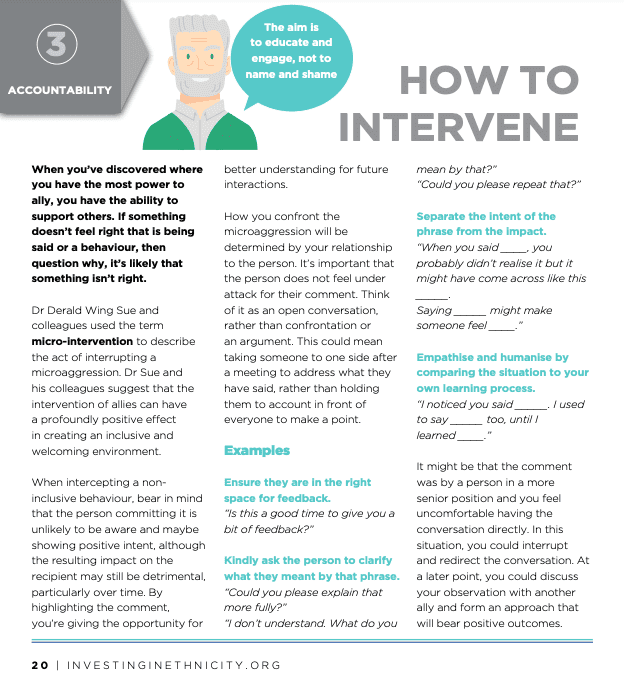
Outline the procedure for people managers, if they witness or are reported any serious cases of racism within the workplace. For more subtle, one off situations within teams, please read our allies toolkit (page 11)
4. Supporting affected colleagues
Whilst processes are already in place for anti-bullying, it might be worth considering a dedicated way of ensuring that there is a support mechanism for colleagues who have been affected.
A first line for support
If you have inclusion champions (or similar), who have had sufficient training, signpost then as a line of contact for concerns. Consider guidance and training for people managers to help them to be able to support the team and communicate any updates.
If people managers are equipped and have had the necessary training, they should check in with staff who have expressed they are affected by the external climate.
Anonymous or dedicated support line
Consider anonymous support. Some organisations have set up a dedicated support line or signposted to external support.
Safety of colleagues
Assess all situations and have a mechanism to monitor planned riots or anything that might affect colleagues. For example: danger commuting to the office, – allow colleagues affected to work from home where needed.
5. Ensuring safety of public or customer facing colleagues
Many of the organisations we have worked with have created specific training on how to deal with racist behaviour from the public towards colleagues. All colleagues should be aware of the relavent policies and processes on how to deal with situations, whilst ensuring safety.
Examples of what some organisations are doing:
- Refusal to serve the customer (or process to ban them for repeated behaviour)
- Posters in stores or at locations on anti-racism or stamping out miss treatment of colleagues
- Colleagues given training on how to deal with discriminatory situations and behaviour, including how to stand up against discriminatory or racist behaviour directed at colleagues
- People managers in customer-facing roles given training and how to support their team
- Alerts on any potential local disturbances or protests
6. Longer-term strategy: Discriminatory behaviour is not a one off
It’s important to continue to monitor any current situation, and adapt your plan if needed.
- Continue to check in with employees and keep an eye on the external climate. Some employers have carried out listening sessions after large incidences, but also be conscious that some colleagues may not feel comfortable discussing a subject that could be very difficult for them, so always ask first.
- Consider how you can ensure things are in place if a similar incident was to happen? And think about what you should do before it happens.
- Give colleagues training on stamping out discriminatory behaviour and supporting colleagues
- Get alerts on any potential local or national unrest or protests that might affect your colleagues
Review policies
Ensure policies cover what to do if colleagues display discriminatory behaviour inside or outside of the workplace based on political or societal views, give examples of what is not OK at work, and ensure this is easy to access for all colleagues.
Review policy on events, external speakers and other area where people might give exposure to colleagues of political or social views that could be deemed exclusionary.
When there are polarised viewpoints in the workplace:
Whilst employees are entitled to their viewpoint, within a place of work it is an employers duty of care to ensure a safe working environment. Some quick tips but please get in touch on more information around this topic.
- Company Values
Look at your company values, and ensure they are running through your policies. - Communicate expectation on behaviours towards colleagues
Ensure that employees know as standard what constitutes non-inclusive behaviour. - What is a workplace, and what is it not
Whilst employees may have a range of polarised viewpoints on different topics from immigration to current world conflicts and religious beliefs. Have a strong communication that highlights areas that aren’t supportive of inclusion in the workplace.

Please get in touch with us if you’d like to find out more about how your organisation can be more inclusive of under-represented ethnic groups. Contact us.